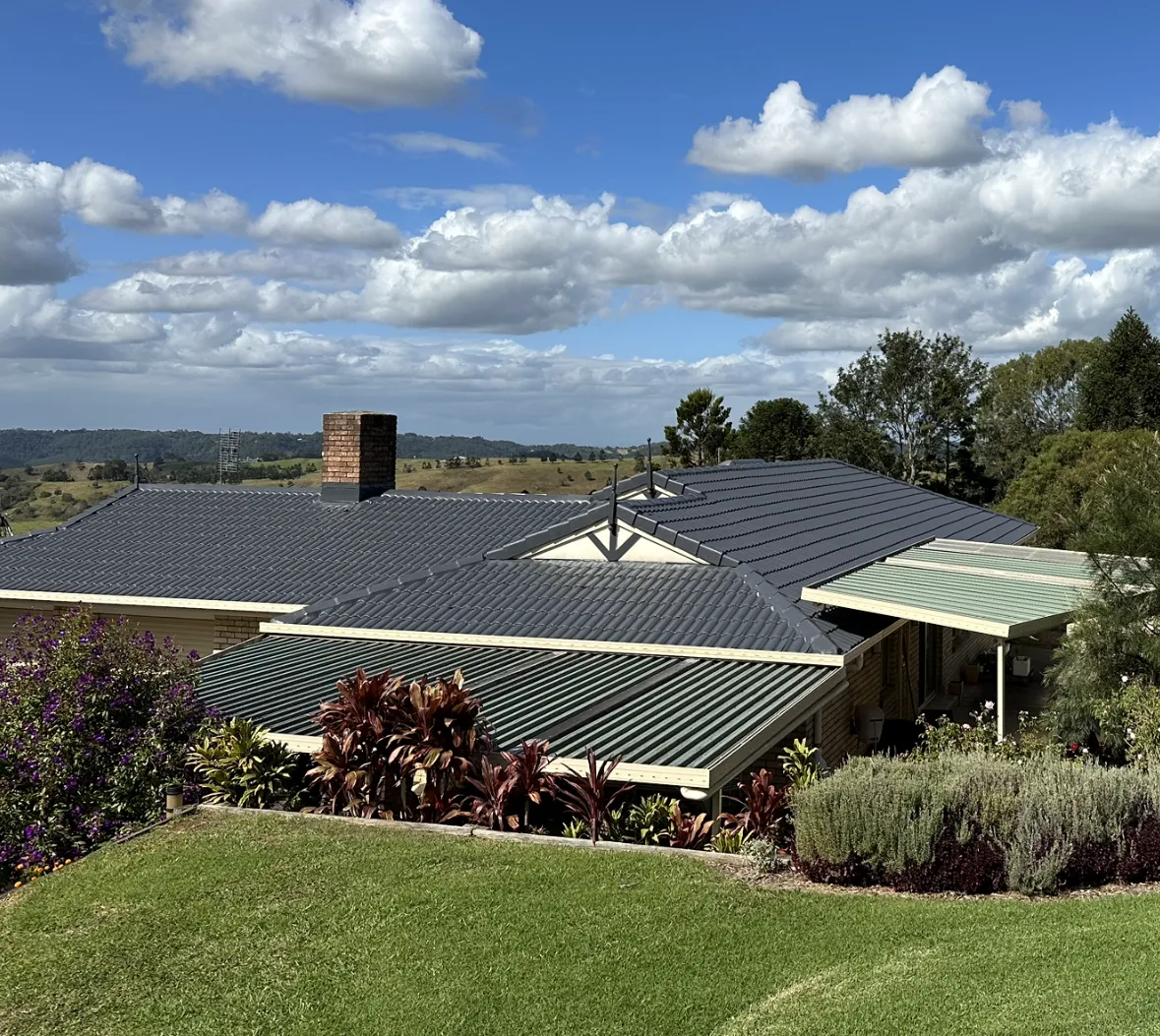
The first thing worth knowing is that "restoration" is not a defined product, and two quotes carrying the word can cover very different work. The business's own pages describe its scope in plain terms: cleaning, repairing and recoating; on metal roofs, addressing rust, replacing corroded sections and applying protective coatings; on tile roofs, replacing broken tiles, re-bedding and re-pointing the ridge caps and applying coatings. If one quote covers those operations and another covers two of them, the cheaper number is not the cheaper job. The operations, not the label, are what to compare, and the way to compare them is a written quote that lists them.
The second is that the pointing under the ridge and hip caps is a fastening question rather than a cosmetic one, and it is the line on a quote nobody can walk outside and check. The National Construction Code's housing provisions require roof tiles and hip, ridge, barge and capping tiles to be fixed, and they list flexible pointing material complying with AS 2050 among the accepted fixings, alongside nails, screws and clips. A coating rolled over failed pointing hides the fault instead of repairing it, and the roof looks finished while the ridge line is still open to wind and water. On a northside tile roof the pointing is the first thing an inspection settles.
The third is age, and the northside holds housing from every era. Queensland Government guidance treats a home built before 1990 as likely to contain some asbestos material, and says you cannot tell by looking. It is illegal to use a high-pressure water blaster on an asbestos cement roof, and Queensland has prosecuted a painting contractor over cleaning one that way to prepare it for painting. Cleaning is the first stage of every restoration, so on an older roof the material has to be settled by someone qualified to assess it before any cleaning method is chosen, and that assessment is not roofing work. Further back again, Brisbane City Council's character rules primarily cover buildings built before the end of 1946, with special considerations for buildings built before 1911. A restoration that replaces like with like changes neither the form nor the material of a roof, but a job that grows into a change of material or a re-roof may; City Plan online will show whether an overlay applies to your address, and Council is the place to ask before anything is ordered.
The fourth is water, and in Brisbane that means storms and hail as much as steady rain. The Queensland Government's storm-season checklist opens with the roof: check its condition and repair loose tiles, eaves and screws, and clean gutters and downpipes so water can drain away as quickly as possible. The business's own pages add a northside detail: on metal roofs, hail and falling tree debris leave divots that hold water and start rust, and silicone sealant applied as a quick fix later gets in the way of both pressure cleaning and painting. None of this is decided from a suburb profile. Whether your roof should be restored or replaced, or whether a repair or a repaint is the honest answer instead, is decided on the roof: how many tiles are cracked or slipped, how much ridge and hip pointing has failed, whether the surface will still hold a coating, and on metal roofs whether the sheeting and fixings are sound rather than rusted through. That is why every job here opens with an inspection rather than a price over the phone.